I had an email today in response to my article on 'Article Base' enquiring about more information; here is the answer I gave:
In answer to your enquiry you'll be pleased to know that it is not the cold that causes problems for your birds but wet and draughty conditions certainly will.
To give you some idea of what I'm on about my birds have nothing more than a standard 6 x 4 shed as their night shelter, but I have made a few minor alterations for their comfort during the winter.
Firstly I lined the inside of the shed, between the supports, with old carpet underlay which I stuck on with 'No Nails' adhesive but any decent adhesive will do. You don't have to use carpet underlay as I did but any old foam, old carpet or anything you have or can get hold of will do to act as insulation.
I then boarded out the whole of the inside with 6mm ply board, this was reasonably cheap and was easy to cut to shape with either a jigsaw or standard saw, I attached it with normal nails.
That's basically the only alterations I made, the shed already had felt on the roof so this made it waterproof. I use no form of artificial heating whatsoever.
I noticed that you have finches and canaries; as small birds by comparison to the others these need to eat more often to build up their fat reserves to help their bodies stay warm so it is vitally important that you make sure their is always a plentiful supply of food, and of course fresh water, for them at all times, and the chances are they will eat considerably more than in the summer to help them to stay warm.
I also find it helps to provide some type of artificial lighting in the winter evenings; it gets dark by 5 pm and then does not start to lighten until 7 am the following morning, that's a massive 14 hours without light and your birds will only eat if there is enough light for them to see what they are doing. As small birds like finches and canaries need to eat more often to ask them to go 14 hours without food can and often will cause problems.
Install the light in such a position so as to get light into the night shelter without your birds being able to make contact with the hot bulb and burn themselves; if you have a security area between your access point to the night shelter and the access point to the birds area then install it there, if the barrier is solid then remove some of it and replace it with aviary mesh or clear Perspex so the light will penetrate into the birds dorm. If not then install the bulb in the dorm but fence it off with some aviary mesh to stop them getting to it and of course make sure any power cables are out of their reach too, you know they are bound to chew such things if they can.
Allow your birds about 7 to 8 hours of darkness to let them sleep by switching the light on and off manually or fit a timer to do it automatically; this is what I do. I bought a cheap electronic timer (only cost me £3) and set it to switch the light on as it gets dark (about 4.30 pm in the height of winter) and off about 7 to 8 hours before dawn (about 11 pm to 12 midnight in the height of winter).
Of course you will need to get rid of the ice that should be their water and replace it with fresh water about 2 or 3 times a day, and keep checking the food supply. Also try and close off their access points to the outside once they are all in the night shelter if you can, this will help prevent draughts and keep them inside where it's dry and draught free til you let them out in the morning.
To summarise in the clearest way; I'm sure you have noticed that even when it is bitterly cold if you have your winter gear on in still and dry conditions you're quite comfortable, and it's only when it's windy or wet do you feel cold. It's exactly the same for your birds.
The above things might seem like a lot of work but they're not really, and are just a few basic and easily achieved precautions, and well worth that bit of extra effort for your birds' sake.
Last winter we recorded some of the lowest winter temperatures on record, often below minus 10 degrees. With the added precautions above I had no winter casualties whatsoever, and I also have finches (plus budgies, cockatiels and Java sparrows) in my exposed outdoor aviary.
I know this has seemed quite exhaustive but I sincerely hope the information helps to ensure you have a casualty-free and successful winter of bird-keeping.
If you'd like a bit more information then please do not hesitate to contact me at stanton.birdman@gmail.com or Pete@stantonbirdman.com
More info about bird keeping can be found on my website at http://www.stantonbirdman.com/
or any of my blog sites: http://www.StantonBirdman.wordpress.com/
and also http://www.stanton-birdman.blogspot.com/.
To your success!
Pete
'Stanton Birdman'

Showing posts with label parakeet. Show all posts
Showing posts with label parakeet. Show all posts
Monday, 17 October 2011


Saturday, 8 October 2011
Small Pet Birds - Australian Grass Parakeets
Yes I know it's took me a long time to get around to this as I promised it months ago. I've been so busy it has had to take a back seat for a while and even now it is not much more than a previous post but with pictures and links added in, but at least you will be able to access more info about these beautiful little parrots.
Australian grass parakeets are popular as pets or aviary birds due to their colourful markings, small size and placid nature. About the same size as budgerigars; they do however command a premium price by comparison but are well within the reach of most enthusiasts. There are about 6 popular species of grass parakeet used in aviculture.
All the species of Australian grass parakeets are closely related to the budgerigar but unique in their own separate ways. When kept as domestic birds they have very similar requirements to budgerigars; same type and size of nest box, same or similar type of food etc. so their requirements are easily met.
Originating from the grasslands of their native land as the name suggests, these are beautiful little parrots in a good variety of colours; often the iridescence of their plumage makes them even more attractive to the bird keeper. Also their calm and placid nature is an added attraction along with the fact that they are not prone to annoying squawking and often emit nothing more than a just audible chirp, making them ideal in flats or apartments where a quiet pet is beneficial.
Grass parakeets are readily available on the market but due to their desirable characteristics and appearance you will find that demand often outstrips supply. So don’t expect to pay less than £30 each and often more; not a bad price really but quite steep when compared to their nearest pet neighbours, the budgerigars which can often be picked up for £10 or even less.
A bit more information about grass-parakeets (or grass parrots as they're also known) is available from 'grassparakeet.com', 'proaviculture.com', and 'avianweb.com'.
The most common species as pets are the bourke (bourke’s parakeet), scarlet-chested (splendid), turquoisine, elegant parakeet, rock parrot, blue-winged parakeet, and the red-rump. Search for any of these in a good online image search and you will notice immediately why they are so desirable to bird keepers.

Bourke
Neopsephotus Bourkii
It is claimed that of all the grass parakeets these are the easiest to keep in captivity, as they are very undemanding. They originate from central and south-western Australia and are approximately 7.5 inch 19 cm long. Bourke’s parakeets are considered by some to be rather dull due to their brown colour but they do have a pink front and blue on the wings, there are some brightly coloured mutations however such as the rosy bourke, and all have a calm and charming nature.
Click here for a related video.
More stuff on the bourke can be had by going here or alternatively click this link.

Elegant
Neophema elegans
Native to southern Australia the elegant grass parakeets are olive-yellow in colour with a blue band across the forehead and along the edge of the wings and are about 8.75 inch 22 cm long. Very popular as captive birds with many keepers throughout the globe.
The elegant grass parakeet on video
More information from 'AvianWeb' and 'Wikipedia'
 Red rump
Psephotus haematonotus
Originating from southeast Australia and found in flocks or pairs in open country, also frequenting suburban gardens and parks but avoiding the wetter heavily timbered areas and coastal regions. A medium sized parrot of about 25 – 28 cm 9.75 – 11 inches and emerald green in colour with yellow underparts, the actual red-rump only applies to the male of the species.
Red rump on video at 'YouTube'
Red rump at a our old friends 'AvianWeb' and of course 'Wikipedia'

Blue-winged
Neophema chrysostoma
A migratory species that breeds in Tasmania but sees the winter out in southeast Australia, found in flocks of up to 2000 before migration but usually in pairs during the breeding season. These little parrots are about 20 – 22 cm 8 – 8.5 inches and mainly olive green with a blue band to the forehead and edge of wings and yellow belly (very similar markings to the elegant but the blue banding is less profound).
Here's a video with the blue-winged grass parakeet in it.
More stuff on the blue-winged can be sought from 'AvianWeb' or alternatively 'Wikipedia', or if you like try both.

Splendid
Neophema splendida
Also commonly known as the scarlet-chested parakeet and often confused with the turquoisine due to similar markings. About 7.5 to 8 inches 19 – 20 cm in length. As their name implies these have a scarlet chest but also a yellow belly and underside, bright blue (often iridescent) head and wing edges and a deep green back and rump. Considered by some to be the most beautiful of the grass parakeet species and so making them very popular in captivity. Native to western new south Wales and interior western Australia.
Watch splendid grass parakeet at 'YouTube'
More details by going here and here

TurquoisineNeophema pulchella
Once common throughout eastern Australia but now mainly found in the north eastern areas. Approximately 20 cm 8 inch long. Also a desirable and popular pet due to its calm and placid nature (a trait that seems common in all grass parakeets) and it’s wonderful iridescent turquoise colouring to the crown, face and edges of wings, green back, often orange-yellow chest and red belly.
A bit of a movie star is the turquoisine, here are not one but three vids for you:
Vid 1
Vid 2
Vid 3
Of course these entries wouldn't be the same without our 'Wikipedia' and 'AvianWeb' links.
View pictures related to this post on 'Facebook'
Hope this has satisfied your curiosity, more Aussie birds will be up here one day but I can't promise when, after all it took me long enough to get this one on here, so just watch this space.
Australian grass parakeets are popular as pets or aviary birds due to their colourful markings, small size and placid nature. About the same size as budgerigars; they do however command a premium price by comparison but are well within the reach of most enthusiasts. There are about 6 popular species of grass parakeet used in aviculture.
All the species of Australian grass parakeets are closely related to the budgerigar but unique in their own separate ways. When kept as domestic birds they have very similar requirements to budgerigars; same type and size of nest box, same or similar type of food etc. so their requirements are easily met.
Originating from the grasslands of their native land as the name suggests, these are beautiful little parrots in a good variety of colours; often the iridescence of their plumage makes them even more attractive to the bird keeper. Also their calm and placid nature is an added attraction along with the fact that they are not prone to annoying squawking and often emit nothing more than a just audible chirp, making them ideal in flats or apartments where a quiet pet is beneficial.
Grass parakeets are readily available on the market but due to their desirable characteristics and appearance you will find that demand often outstrips supply. So don’t expect to pay less than £30 each and often more; not a bad price really but quite steep when compared to their nearest pet neighbours, the budgerigars which can often be picked up for £10 or even less.
A bit more information about grass-parakeets (or grass parrots as they're also known) is available from 'grassparakeet.com', 'proaviculture.com', and 'avianweb.com'.
The most common species as pets are the bourke (bourke’s parakeet), scarlet-chested (splendid), turquoisine, elegant parakeet, rock parrot, blue-winged parakeet, and the red-rump. Search for any of these in a good online image search and you will notice immediately why they are so desirable to bird keepers.

Bourke
Neopsephotus Bourkii
It is claimed that of all the grass parakeets these are the easiest to keep in captivity, as they are very undemanding. They originate from central and south-western Australia and are approximately 7.5 inch 19 cm long. Bourke’s parakeets are considered by some to be rather dull due to their brown colour but they do have a pink front and blue on the wings, there are some brightly coloured mutations however such as the rosy bourke, and all have a calm and charming nature.
Click here for a related video.
More stuff on the bourke can be had by going here or alternatively click this link.

Elegant
Neophema elegans
Native to southern Australia the elegant grass parakeets are olive-yellow in colour with a blue band across the forehead and along the edge of the wings and are about 8.75 inch 22 cm long. Very popular as captive birds with many keepers throughout the globe.
The elegant grass parakeet on video
More information from 'AvianWeb' and 'Wikipedia'

Psephotus haematonotus
Originating from southeast Australia and found in flocks or pairs in open country, also frequenting suburban gardens and parks but avoiding the wetter heavily timbered areas and coastal regions. A medium sized parrot of about 25 – 28 cm 9.75 – 11 inches and emerald green in colour with yellow underparts, the actual red-rump only applies to the male of the species.
Red rump on video at 'YouTube'
Red rump at a our old friends 'AvianWeb' and of course 'Wikipedia'

Blue-winged
Neophema chrysostoma
A migratory species that breeds in Tasmania but sees the winter out in southeast Australia, found in flocks of up to 2000 before migration but usually in pairs during the breeding season. These little parrots are about 20 – 22 cm 8 – 8.5 inches and mainly olive green with a blue band to the forehead and edge of wings and yellow belly (very similar markings to the elegant but the blue banding is less profound).
Here's a video with the blue-winged grass parakeet in it.
More stuff on the blue-winged can be sought from 'AvianWeb' or alternatively 'Wikipedia', or if you like try both.

Splendid
Neophema splendida
Also commonly known as the scarlet-chested parakeet and often confused with the turquoisine due to similar markings. About 7.5 to 8 inches 19 – 20 cm in length. As their name implies these have a scarlet chest but also a yellow belly and underside, bright blue (often iridescent) head and wing edges and a deep green back and rump. Considered by some to be the most beautiful of the grass parakeet species and so making them very popular in captivity. Native to western new south Wales and interior western Australia.
Watch splendid grass parakeet at 'YouTube'
More details by going here and here

TurquoisineNeophema pulchella
Once common throughout eastern Australia but now mainly found in the north eastern areas. Approximately 20 cm 8 inch long. Also a desirable and popular pet due to its calm and placid nature (a trait that seems common in all grass parakeets) and it’s wonderful iridescent turquoise colouring to the crown, face and edges of wings, green back, often orange-yellow chest and red belly.
A bit of a movie star is the turquoisine, here are not one but three vids for you:
Vid 1
Vid 2
Vid 3
Of course these entries wouldn't be the same without our 'Wikipedia' and 'AvianWeb' links.
View pictures related to this post on 'Facebook'
Hope this has satisfied your curiosity, more Aussie birds will be up here one day but I can't promise when, after all it took me long enough to get this one on here, so just watch this space.
Friday, 26 August 2011
Pet birds - wing clipping
Today I received an interesting email from someone who bought a budgie from me recently asking about wing clipping and if I knew how to do it.
Although I am aware of the procedure, wing clipping is something I have never actually done in practice. I’ve kept birds for well over ten years and never actually clipped any wings. It suddenly dawned on me that for such a simple procedure I wondered myself why I have never actually tried it in over a decade of bird keeping as a main hobby.
The simple answer is most of my birds are housed in a large outdoor aviary so I’ve never had to, and although I have kept a number of birds in cages as household pets I have never considered actually clipping their wings.
Some would argue that the procedure is cruel and unnecessary, whereas some would argue that all pet birds should have their wings clipped.
All I can say is it is a matter of personal preference, the bird feels no pain or loss whatsoever apparently and it does prevent them from flying away as with clipped wings they are unable to get any lift, and also if attempting to fly from a height they’ve climbed would simply glide to the ground with no pain or injury incurred. If they attempt to fly it would go some way to preventing injury by crashing into windows and other inanimate objects.
So it’s up to you. If you wish to tame your bird then wing clipping will help but if like mine your birds live in an aviary in a semi-wild state then there is no need.
 The procedure is simple with just a trimming of the middle section of the primary feathers on each wing. It would be quite easy to do yourself but if you are unsure then the best bet is to call in the professionals.
Below is a few videos I’ve found that will show you the procedure, just click on any or all of the links to access them, the diagram above will also show you where to clip.
http://youtu.be/eqhxMWBcNO8
http://youtu.be/NftNrmu3LFo
http://youtu.be/kvXMZ0kgeq0
http://www.ehow.com/video_2349545_wing-clipping-parakeets.html
Thanks!
'Stanton Birdman' - aka - Pete
Although I am aware of the procedure, wing clipping is something I have never actually done in practice. I’ve kept birds for well over ten years and never actually clipped any wings. It suddenly dawned on me that for such a simple procedure I wondered myself why I have never actually tried it in over a decade of bird keeping as a main hobby.
The simple answer is most of my birds are housed in a large outdoor aviary so I’ve never had to, and although I have kept a number of birds in cages as household pets I have never considered actually clipping their wings.
Some would argue that the procedure is cruel and unnecessary, whereas some would argue that all pet birds should have their wings clipped.
All I can say is it is a matter of personal preference, the bird feels no pain or loss whatsoever apparently and it does prevent them from flying away as with clipped wings they are unable to get any lift, and also if attempting to fly from a height they’ve climbed would simply glide to the ground with no pain or injury incurred. If they attempt to fly it would go some way to preventing injury by crashing into windows and other inanimate objects.
So it’s up to you. If you wish to tame your bird then wing clipping will help but if like mine your birds live in an aviary in a semi-wild state then there is no need.


Below is a few videos I’ve found that will show you the procedure, just click on any or all of the links to access them, the diagram above will also show you where to clip.
http://youtu.be/eqhxMWBcNO8
http://youtu.be/NftNrmu3LFo
http://youtu.be/kvXMZ0kgeq0
http://www.ehow.com/video_2349545_wing-clipping-parakeets.html
Thanks!
'Stanton Birdman' - aka - Pete
Thursday, 18 August 2011
Get your FREE pet bird ebook
Hi folks!
Here’s your chance to get hold of a FREE pet bird related ebook.
Although I am named as the author of this it is actually a PLR ebook I bought a while ago and added a few pictures and myself as the author, so it’s not brilliant but it does give some valuable information to anyone who wishes to start and keep pet birds.
I can write much better material and have done so with my ‘Pet Bird Keeping Secrets, The Stealth Guidebook’. You can also get 'Pet Bird Keeping Secrets, The Stealth Guidebook' by visiting my simple one-page site at http://www.birdkeepingsecrets.com/ where you can get a copy from several other resources. The eBook I’m giving away free however will prove full of useful information to anyone new to the hobby so it is worth the original asking price of $14.97 but it’s now yours for FREE, and you can also get it from Bird Keeping Secrets, just click on the 'Get Your Free EBook' link.
It’s FREE so it’s worth having even if it don’t teach you anything, but I’m sure it will!
Please also feel free to give copies of it away to as many other people as you like, in fact I sincerely hope you do just that! When you read it you will understand why.
So don’t delay any longer and click this link NOW to get your FREE copy.
You can either click the link and then once the book is visible click the ‘Save a Copy’ button in the top left corner or right click on the link and choose ‘Save Target As’ from the dropdown menu.
It is in ‘Adobe PDF’ format so you can read it on any computer that has ‘Adobe Reader’ installed, which is most of them. If you don’t have ‘Adobe Reader’ then click here or here and get it for FREE.
Here’s your chance to get hold of a FREE pet bird related ebook.
Although I am named as the author of this it is actually a PLR ebook I bought a while ago and added a few pictures and myself as the author, so it’s not brilliant but it does give some valuable information to anyone who wishes to start and keep pet birds.
I can write much better material and have done so with my ‘Pet Bird Keeping Secrets, The Stealth Guidebook’. You can also get 'Pet Bird Keeping Secrets, The Stealth Guidebook' by visiting my simple one-page site at http://www.birdkeepingsecrets.com/ where you can get a copy from several other resources. The eBook I’m giving away free however will prove full of useful information to anyone new to the hobby so it is worth the original asking price of $14.97 but it’s now yours for FREE, and you can also get it from Bird Keeping Secrets, just click on the 'Get Your Free EBook' link.
It’s FREE so it’s worth having even if it don’t teach you anything, but I’m sure it will!
Please also feel free to give copies of it away to as many other people as you like, in fact I sincerely hope you do just that! When you read it you will understand why.
So don’t delay any longer and click this link NOW to get your FREE copy.
You can either click the link and then once the book is visible click the ‘Save a Copy’ button in the top left corner or right click on the link and choose ‘Save Target As’ from the dropdown menu.
It is in ‘Adobe PDF’ format so you can read it on any computer that has ‘Adobe Reader’ installed, which is most of them. If you don’t have ‘Adobe Reader’ then click here or here and get it for FREE.
Wednesday, 10 August 2011
Flutter of tiny wings
I will be posting more details about the Australian grass parakeets soon, as promised, although somewhat delayed due to my other commitments.
I thought I’d take the opportunity to do a little upgrade post about the bird situation at home.
Stanton Birdman currently has 5 baby budgies for sale to good homes only. They have now been taken from the aviary and placed in a cage ready to go to eager buyers. There was 6 to start with from 2 clutches but one has already been claimed, a beautiful bright yellow from Squeek’s first clutch of the year, go to my earlier post http://stanton-birdman.blogspot.com/2011/07/nest-box-cleaning-time-again.html to learn a bit more about their upbringing and a photo of them when they were younger.
To try and make sure they go to good homes I'm asking £10 each for them. I am only selling them locally however to minimise the phychological damage that they would suffer should they have to travel far to new homes. If you would like any and live fairly local to Sutton-in-Ashfield, Nottinghamshire, UK then please email me at stanton.birdman@gmail.com.
Of the 5 that are left, 2 are from ‘Squeek’ (hen) – not sure who Dad is – and the other three are from ‘Blue’ (hen) and ‘Pied’ (cock), my most prolific breeders.
Check the picture to take a look at them now but please excuse the quality as I only have my mobile phone’s 2mp built-in camera to take photos with.
They are all strong and healthy birds that are eating well and ready to go, but as they have not yet seen their first molt I can’t tell which are female and which are male.
So far there’s no cockatiel chicks (although they’ve laid eggs) and no Java sparrow chicks (they have laid eggs also), the Bengalese (society) finches and the zebra finches appear to be struggling with the concept of egg laying – the nests are built but no eggs laid. Meanwhile both ‘Squeek’ and ‘Blue’ have already laid again, but I will only allow my birds to raise a maximum of 2 clutches each per year.
On a similar note, ‘Squeek’s’ baby from last year – another beautiful bright yellow – which I decided to keep myself because of her colour has also laid eggs but no chicks yet, so good luck to her!
Apart from the budgies the other birds seem to be struggling but I live in optimism.
I thought I’d take the opportunity to do a little upgrade post about the bird situation at home.
Stanton Birdman currently has 5 baby budgies for sale to good homes only. They have now been taken from the aviary and placed in a cage ready to go to eager buyers. There was 6 to start with from 2 clutches but one has already been claimed, a beautiful bright yellow from Squeek’s first clutch of the year, go to my earlier post http://stanton-birdman.blogspot.com/2011/07/nest-box-cleaning-time-again.html to learn a bit more about their upbringing and a photo of them when they were younger.
To try and make sure they go to good homes I'm asking £10 each for them. I am only selling them locally however to minimise the phychological damage that they would suffer should they have to travel far to new homes. If you would like any and live fairly local to Sutton-in-Ashfield, Nottinghamshire, UK then please email me at stanton.birdman@gmail.com.
Of the 5 that are left, 2 are from ‘Squeek’ (hen) – not sure who Dad is – and the other three are from ‘Blue’ (hen) and ‘Pied’ (cock), my most prolific breeders.
 |
| This year's first babies ready to go |
They are all strong and healthy birds that are eating well and ready to go, but as they have not yet seen their first molt I can’t tell which are female and which are male.
So far there’s no cockatiel chicks (although they’ve laid eggs) and no Java sparrow chicks (they have laid eggs also), the Bengalese (society) finches and the zebra finches appear to be struggling with the concept of egg laying – the nests are built but no eggs laid. Meanwhile both ‘Squeek’ and ‘Blue’ have already laid again, but I will only allow my birds to raise a maximum of 2 clutches each per year.
On a similar note, ‘Squeek’s’ baby from last year – another beautiful bright yellow – which I decided to keep myself because of her colour has also laid eggs but no chicks yet, so good luck to her!
Apart from the budgies the other birds seem to be struggling but I live in optimism.
Tuesday, 12 July 2011
Small pet birds of Australia - A brief introduction to the grass parakeets
Here is an article I posted on 'EzineArticles' as a brief introduction. I will add more stuff about grass parakeets, with pictures and videos soon. Watch this space!
Australian grass parakeets are popular as pets or aviary birds due to their colourful markings, small size and placid nature. About the same size as budgerigars; they do however command a premium price by comparison but are well within the reach of most enthusiasts. There are about 6 popular species of grass parakeet used in aviculture.
All the species of Australian grass parakeets are closely related to the budgerigar but unique in their own separate ways. When kept as domestic birds they have very similar requirements to budgerigars; same type and size of nest box, same or similar type of food etc. so their requirements are easily met.
Originating from the grasslands of their native land as the name suggests, these are beautiful little parrots in a good variety of colours; often the iridescence of their plumage makes them even more attractive to the bird keeper. Also their calm and placid nature is an added attraction along with the fact that they are not prone to annoying squawking and often emit nothing more than a just audible chirp, making them ideal in flats or apartments where a quiet pet is beneficial.
Grass parakeets are readily available on the market but due to their desirable characteristics and appearance you will find that demand often outstrips supply. So don’t expect to pay less than £30 each and often more; not a bad price really but quite steep when compared to their nearest pet neighbours, the budgerigars which can often be picked up for £10 or even less.
The most common species as pets are the bourke (bourke’s parakeet), scarlet-chested (splendid), turquoisine, elegant parakeet, rock parrot, blue-winged parakeet, and the red-rump. Search for any of these in a good online image search and you will notice immediately why they are so desirable to bird keepers.
Bourke
Neopsephotus Bourkii
It is claimed that of all the grass parakeets these are the easiest to keep in captivity, as they are very undemanding. They originate from central and south-western Australia and are approximately 7.5 inch 19 cm long. Bourke’s parakeets are considered by some to be rather dull due to their brown colour but they do have a pink front and blue on the wings, there are some brightly coloured mutations however such as the rosy bourke, and all have a calm and charming nature.
Elegant
Neophema elegans
Native to southern Australia the elegant grass parakeets are olive-yellow in colour with a blue band across the forehead and along the edge of the wings and are about 8.75 inch 22 cm long. Very popular as captive birds with many keepers throughout the globe.
Red rump
Psephotus haematonotus
Originating from southeast Australia and found in flocks or pairs in open country, also frequenting suburban gardens and parks but avoiding the wetter heavily timbered areas and coastal regions. A medium sized parrot of about 25 – 28 cm 9.75 – 11 inches and emerald green in colour with yellow underparts, the actual red-rump only applies to the male of the species.
Blue-winged
Neophema chrysostoma
A migratory species that breeds in Tasmania but sees the winter out in southeast Australia, found in flocks of up to 2000 before migration but usually in pairs during the breeding season. These little parrots are about 20 – 22 cm 8 – 8.5 inches and mainly olive green with a blue band to the forehead and edge of wings and yellow belly (very similar markings to the elegant but the blue banding is less profound).
Splendid
Neophema splendida
Also commonly known as the scarlet-chested parakeet and often confused with the turquoisine due to similar markings. About 7.5 to 8 inches 19 – 20 cm in length. As their name implies these have a scarlet chest but also a yellow belly and underside, bright blue (often iridescent) head and wing edges and a deep green back and rump. Considered by some to be the most beautiful of the grass parakeet species and so making them very popular in captivity. Native to western new south Wales and interior western Australia.
Turquoisine
Neophema pulchella
Once common throughout eastern Australia but now mainly found in the north eastern areas. Approximately 20 cm 8 inch long. Also a desirable and popular pet due to its calm and placid nature (a trait that seems common in all grass parakeets) and it’s wonderful iridescent turquoise colouring to the crown, face and edges of wings, green back, often orange-yellow chest and red belly.

Australian grass parakeets are popular as pets or aviary birds due to their colourful markings, small size and placid nature. About the same size as budgerigars; they do however command a premium price by comparison but are well within the reach of most enthusiasts. There are about 6 popular species of grass parakeet used in aviculture.
All the species of Australian grass parakeets are closely related to the budgerigar but unique in their own separate ways. When kept as domestic birds they have very similar requirements to budgerigars; same type and size of nest box, same or similar type of food etc. so their requirements are easily met.
Originating from the grasslands of their native land as the name suggests, these are beautiful little parrots in a good variety of colours; often the iridescence of their plumage makes them even more attractive to the bird keeper. Also their calm and placid nature is an added attraction along with the fact that they are not prone to annoying squawking and often emit nothing more than a just audible chirp, making them ideal in flats or apartments where a quiet pet is beneficial.
Grass parakeets are readily available on the market but due to their desirable characteristics and appearance you will find that demand often outstrips supply. So don’t expect to pay less than £30 each and often more; not a bad price really but quite steep when compared to their nearest pet neighbours, the budgerigars which can often be picked up for £10 or even less.
The most common species as pets are the bourke (bourke’s parakeet), scarlet-chested (splendid), turquoisine, elegant parakeet, rock parrot, blue-winged parakeet, and the red-rump. Search for any of these in a good online image search and you will notice immediately why they are so desirable to bird keepers.
Bourke
Neopsephotus Bourkii
It is claimed that of all the grass parakeets these are the easiest to keep in captivity, as they are very undemanding. They originate from central and south-western Australia and are approximately 7.5 inch 19 cm long. Bourke’s parakeets are considered by some to be rather dull due to their brown colour but they do have a pink front and blue on the wings, there are some brightly coloured mutations however such as the rosy bourke, and all have a calm and charming nature.
Elegant
Neophema elegans
Native to southern Australia the elegant grass parakeets are olive-yellow in colour with a blue band across the forehead and along the edge of the wings and are about 8.75 inch 22 cm long. Very popular as captive birds with many keepers throughout the globe.
Red rump
Psephotus haematonotus
Originating from southeast Australia and found in flocks or pairs in open country, also frequenting suburban gardens and parks but avoiding the wetter heavily timbered areas and coastal regions. A medium sized parrot of about 25 – 28 cm 9.75 – 11 inches and emerald green in colour with yellow underparts, the actual red-rump only applies to the male of the species.
Blue-winged
Neophema chrysostoma
A migratory species that breeds in Tasmania but sees the winter out in southeast Australia, found in flocks of up to 2000 before migration but usually in pairs during the breeding season. These little parrots are about 20 – 22 cm 8 – 8.5 inches and mainly olive green with a blue band to the forehead and edge of wings and yellow belly (very similar markings to the elegant but the blue banding is less profound).
Splendid
Neophema splendida
Also commonly known as the scarlet-chested parakeet and often confused with the turquoisine due to similar markings. About 7.5 to 8 inches 19 – 20 cm in length. As their name implies these have a scarlet chest but also a yellow belly and underside, bright blue (often iridescent) head and wing edges and a deep green back and rump. Considered by some to be the most beautiful of the grass parakeet species and so making them very popular in captivity. Native to western new south Wales and interior western Australia.
Turquoisine
Neophema pulchella
Once common throughout eastern Australia but now mainly found in the north eastern areas. Approximately 20 cm 8 inch long. Also a desirable and popular pet due to its calm and placid nature (a trait that seems common in all grass parakeets) and it’s wonderful iridescent turquoise colouring to the crown, face and edges of wings, green back, often orange-yellow chest and red belly.
Friday, 24 June 2011
Australian birds as pets - More information about rosellas
There are several species of rosella, all belong to the genus platycercus which refers to the shape of their tails ie. broad or flat, a common feature in all rosellas.
Medium sized parrots averaging about 12 inch in length, give or take a couple of inches either way depending on the subspecies. All are native to Australia and the nearby islands and have distinct cheek patches and a scalloped appearance to the plumage on their backs.
Absent from the barren outback but quite common in coastal areas where they live in suburban gardens and parks, woodlands and forests, and farmland.
Most live together in flocks or small groups out of the breeding season which is when they then pair up and go their own way. Their natural diet consists mainly of seed and fruit.
Their bright colours make them popular pet birds and in captivity can live for over 20 years, please note however that they are usually very aggresive towards other captive birds with which they have to share their home. For this reason it is advisable to keep them in pairs or alone although I have kept golden mantle rosellas in a large aviary with budgies, cockatiels, and kakarikis with no problem. If doing this though you must be sure to have a large aviary so the birds can get away from each other if they need to.
WARNING: don’t ever keep different subspecies of rosella in the same aviary or cage, they will fight to the death so be sure to prevent them from getting at each other if keeping more than one subspecies. The same applies if trying to keep more than two rosellas of the same subspecies together also.
![]() Green Rosella Platycercus caledonicus
Green Rosella Platycercus caledonicus
Sometimes called Tasmanian rosella, the green rosella is not actually native to Australia but to Tasmania and Bass Strait islands. This is the biggest of the rosella family averaging about 14.5 inch (37 cm) in length, and is often regarded as the easiest rosella species to keep in captivity.
The green rosella showcase: Avian Web, Wikipedia, and not just one video but another one also.
![]() Eastern Rosella Platycercus eximius
Eastern Rosella Platycercus eximius
This subspecies is predominant mainly in the south east of the country but also Tasmania and has three recognised subspecies itself. Mainly occupying light woodland areas, but these birds have also been introduced to New Zealand where feral populations exist in the North Island, Hutt Valley and Dunedin in the south island. The eastern rosella is about 12 inch (30 cm) in length and is a very popular pet where the bright and colourful plumage is a big attraction.
Of course we like Wikipedia and Avian Web so much because we get more information from there, now let's watch a movie.
![]() Crimson Rosella Platycercus elegans
Crimson Rosella Platycercus elegans
Also called Pennant’s rosella and Occupying mainly forests and gardens in east and south east Australia but also introduced to New Zealand. The crimson rosella has five subspecies, of which three are actually crimson in colour. In the wild they will gather in small groups, pairs of feeding parties outside the breeding season. Found mainly in coastal and mountain forests and woodlands. Popular pet birds that are about 14 inch (36 cm) in length.
Welcome to the crimson rosella show! Avian Web and Wikipedia, and by special guest appearance here, and here.
![]() Pale-headed Rosella Platycercus adscitus
Pale-headed Rosella Platycercus adscitus
Often known as Mealy rosella this species inhabits open woodland areas and is native to north east Australia. The pale-headed has two subspecies and is very closely related to the Eastern rosella. The length is approximately 33 cm (13 inch) long but almost half, about 15 cm (6 inch) of that is the tail. The pale -headed rosella is also sought after by bird keepers and does make a hardy pet which is easy to keep.
Pale-headed rosella on Wikipedia and Avian Web, and starring in its own show here.
![]()
Western Rosella Platycercus icterotis
Sometimes known as the Stanley rosella this little parrot is native to timbered areas and eucalyptus forests in south west Australia. Usually found in pairs but will form groups of about twenty or so to forage. The western is the smallest rosella averaging about 10 inch (25.5 cm) with two subspecies. As with many rosellas these are often kept as pets or aviary birds where, as is usual with rosellas, their bright colouring is desired.
Read about the Western rosella at Avian Web or Wikipedia.
Watch a short movie featuring Western rosellas in the lead role.
![]() Northern Rosella Platycercus venustus
Northern Rosella Platycercus venustus
Also called Smutty rosella or Brown’s parakeet and is native in the north of Australia as it’s name implies, ranging from the Kimberleys and through Arnhem land to the Gulf of Carpentaria. The northern rosella is the second smallest of the common breeds at about 28 cm (11 inch) long. They live singurlarly or in pairs throughout the open savannah country.
Northern rosella on Wikipedia and Avian Web and YouTube.
All the above are available to the bird keeper but the desire for birds with colourful plumage has outstripped demand in many areas so a premium price often accompanies the purchase of a rosella. Don’t expect to pay less than £80 for one unless you’re lucky!
Check out the rosella pictures on 'Facebook'
Medium sized parrots averaging about 12 inch in length, give or take a couple of inches either way depending on the subspecies. All are native to Australia and the nearby islands and have distinct cheek patches and a scalloped appearance to the plumage on their backs.
Absent from the barren outback but quite common in coastal areas where they live in suburban gardens and parks, woodlands and forests, and farmland.
Most live together in flocks or small groups out of the breeding season which is when they then pair up and go their own way. Their natural diet consists mainly of seed and fruit.
Their bright colours make them popular pet birds and in captivity can live for over 20 years, please note however that they are usually very aggresive towards other captive birds with which they have to share their home. For this reason it is advisable to keep them in pairs or alone although I have kept golden mantle rosellas in a large aviary with budgies, cockatiels, and kakarikis with no problem. If doing this though you must be sure to have a large aviary so the birds can get away from each other if they need to.
WARNING: don’t ever keep different subspecies of rosella in the same aviary or cage, they will fight to the death so be sure to prevent them from getting at each other if keeping more than one subspecies. The same applies if trying to keep more than two rosellas of the same subspecies together also.

Sometimes called Tasmanian rosella, the green rosella is not actually native to Australia but to Tasmania and Bass Strait islands. This is the biggest of the rosella family averaging about 14.5 inch (37 cm) in length, and is often regarded as the easiest rosella species to keep in captivity.
The green rosella showcase: Avian Web, Wikipedia, and not just one video but another one also.

This subspecies is predominant mainly in the south east of the country but also Tasmania and has three recognised subspecies itself. Mainly occupying light woodland areas, but these birds have also been introduced to New Zealand where feral populations exist in the North Island, Hutt Valley and Dunedin in the south island. The eastern rosella is about 12 inch (30 cm) in length and is a very popular pet where the bright and colourful plumage is a big attraction.
Of course we like Wikipedia and Avian Web so much because we get more information from there, now let's watch a movie.

Also called Pennant’s rosella and Occupying mainly forests and gardens in east and south east Australia but also introduced to New Zealand. The crimson rosella has five subspecies, of which three are actually crimson in colour. In the wild they will gather in small groups, pairs of feeding parties outside the breeding season. Found mainly in coastal and mountain forests and woodlands. Popular pet birds that are about 14 inch (36 cm) in length.
Welcome to the crimson rosella show! Avian Web and Wikipedia, and by special guest appearance here, and here.

Often known as Mealy rosella this species inhabits open woodland areas and is native to north east Australia. The pale-headed has two subspecies and is very closely related to the Eastern rosella. The length is approximately 33 cm (13 inch) long but almost half, about 15 cm (6 inch) of that is the tail. The pale -headed rosella is also sought after by bird keepers and does make a hardy pet which is easy to keep.
Pale-headed rosella on Wikipedia and Avian Web, and starring in its own show here.

Western Rosella Platycercus icterotis
Sometimes known as the Stanley rosella this little parrot is native to timbered areas and eucalyptus forests in south west Australia. Usually found in pairs but will form groups of about twenty or so to forage. The western is the smallest rosella averaging about 10 inch (25.5 cm) with two subspecies. As with many rosellas these are often kept as pets or aviary birds where, as is usual with rosellas, their bright colouring is desired.
Read about the Western rosella at Avian Web or Wikipedia.
Watch a short movie featuring Western rosellas in the lead role.

Also called Smutty rosella or Brown’s parakeet and is native in the north of Australia as it’s name implies, ranging from the Kimberleys and through Arnhem land to the Gulf of Carpentaria. The northern rosella is the second smallest of the common breeds at about 28 cm (11 inch) long. They live singurlarly or in pairs throughout the open savannah country.
Northern rosella on Wikipedia and Avian Web and YouTube.
All the above are available to the bird keeper but the desire for birds with colourful plumage has outstripped demand in many areas so a premium price often accompanies the purchase of a rosella. Don’t expect to pay less than £80 for one unless you’re lucky!
Check out the rosella pictures on 'Facebook'
Monday, 20 June 2011
Australian birds as pets - An introduction to rosellas
Of all native Australian birds used as pets the rosellas are amongst the most sought after. This is due to their wonderful variety of colouring, their size and their unique markings. Their scalloped feather markings on the back is what makes them unique in the avian world. There are several different species of rosella, all of them unique in their own way, and they all have similar requirements when used in aviculture.
Common in all rosellas is the scalloped pattern to the feathers on the back and all have distinctive cheek patches. A very colourful and medium sized parrot native to Australia and the surrounding islands. On the Australian mainland these colourful birds tend to inhabit areas of farmland, woodland, forests and suburban gardens and parks, in the coastal mountains and plains but not the outback. Specific breeds tend to inhabit a particular area. Most species of rosella live in large flocks in the wild but not all.It is commonly held that their name originates from the area of Australia in which they were first noticed by early pioneers, the Rose Hill area of Sydney.
The most common species appear to be: Western Rosella - smallest of the species with two subspecies itself and is found in south west Australia. Crimson Rosella - five subspecies and inhabiting east and south east Australia. Green Rosella - the largest species and native to Tasmania. Pale-headed Rosella - two subspecies and found in the eastern part of Australia. Eastern Rosella - three subspecies and although native to the eastern area of the country they are found in many regions including Tasmania and have been introduced to New Zealand where feral populations can be found. Northern Rosella - mainly found in the north as the name suggests but can also be seen in open savanna country and a few other areas, this one is also more likely to be found in small groups or just in pairs in the wild. All these are popular as pets.
An aviary is the best option when keeping rosellas in captivity as this ensures an environment as close to their natural habitat as possible. If an aviary is not an option then they will do OK in cages, as long as the cage is adequately large enough for their requirements. They will need to have regular exercise outside the cage however and should get the opportunity to have a fly around. These birds are not usually talkers and will mainly chirp & squawk, although they could learn a few unique sounds or the odd whistle. A single rosella will form a very strong bond with its owner.
Common in all rosellas is the scalloped pattern to the feathers on the back and all have distinctive cheek patches. A very colourful and medium sized parrot native to Australia and the surrounding islands. On the Australian mainland these colourful birds tend to inhabit areas of farmland, woodland, forests and suburban gardens and parks, in the coastal mountains and plains but not the outback. Specific breeds tend to inhabit a particular area. Most species of rosella live in large flocks in the wild but not all.It is commonly held that their name originates from the area of Australia in which they were first noticed by early pioneers, the Rose Hill area of Sydney.
The most common species appear to be: Western Rosella - smallest of the species with two subspecies itself and is found in south west Australia. Crimson Rosella - five subspecies and inhabiting east and south east Australia. Green Rosella - the largest species and native to Tasmania. Pale-headed Rosella - two subspecies and found in the eastern part of Australia. Eastern Rosella - three subspecies and although native to the eastern area of the country they are found in many regions including Tasmania and have been introduced to New Zealand where feral populations can be found. Northern Rosella - mainly found in the north as the name suggests but can also be seen in open savanna country and a few other areas, this one is also more likely to be found in small groups or just in pairs in the wild. All these are popular as pets.
An aviary is the best option when keeping rosellas in captivity as this ensures an environment as close to their natural habitat as possible. If an aviary is not an option then they will do OK in cages, as long as the cage is adequately large enough for their requirements. They will need to have regular exercise outside the cage however and should get the opportunity to have a fly around. These birds are not usually talkers and will mainly chirp & squawk, although they could learn a few unique sounds or the odd whistle. A single rosella will form a very strong bond with its owner.
Saturday, 4 June 2011
Australian birds as pets – Lorikeets
Continuing our world tour of pet birds we are currently in Australia so here’s some essential facts about lorikeets and their suitability as pet birds.
Unlike many other breeds of parrot the lorikeets are especially adapted to live on a pollen, nectar and fruit diet. A brush like tip to the tongue, long narrow beak and special digestive enzymes make them unique from other parrot type bird species. Small to medium sized and often brightly coloured there are several species from Australia, all of which have similar requirements.
An Introduction to Australia Lorikeet Species on YouTube.
There are over 50 species of lories and lorikeets in areas and countries nearby but only about 7 from Australia itself. These are : ‘musk lorikeet’, ‘little lorikeet’, ‘rainbow lorikeet’, ‘varied lorikeet’, ‘scaly-breasted lorikeet’, ‘red-collared lorikeet’, and ‘purple-crowned lorikeet’. Each will be mentioned briefly here with a note about their sutability as pets.
Musk Lorikeet. Glossopsitta concinna.
(green keet, red-eared lorikeet) Weighing in at about 60 grams with a length of approximately 22 cm (9 inch).
The musk lorikeet relies mainly on native flowering shrubs and trees for food and can cause some problems in commercial orchards. In the wild the musk lorikeet inhabits coastal woodlands and eucalyptus forests, often in large flocks of several hundred.
Very rare as pets in America and Europe but a delightful pet in Australia though still not very popular due to government regulations that require a licence to keep native birds.
Wikipedia article about musk lorikeet.
A quiet pet bird which is also playful and affectionate and can be taught to talk really well. This makes it a popular species of pet bird in Europe, America and its native Australia.
Red-collared Lorikeet. Trichoglossus haematodus rubritorquis.
Approximately 125 grams in weight with a length of about 30 cm (12 inch).
Unlike most of the other species of lorikeet the red-collared lorikeet prefers to abide as a pair or in a small flock. These move around often due to their food source, the eucalyptus flower being a favourite food so they tend to inhabit the open eucalyptus forests most of the time.
Although good pet birds they are kept in low numbers because of availability and price.
Wikipedia about red-collared lorikeet.
Video of red-collared lorikeet on YouTube.
Purple-crowned Lorikeet. Glossopsitta porphyrocephala.
(blue-crowned lorikeet, purple-capped parakeet) About 45 grams and around 16 cm (6 inch) long.
Will form large flocks where food source is plentiful, including urban gardens and orchards. Their natural habitat in the West is in forest areas, whereas in the East they tend to go for coastal heath, mallee and open woodland areas.
Not very often kept as pets or companion birds anywhere, but a little more popular as aviary birds.
Purple-crowned lorikeet on Wikipedia.
YouTube video starring the purple-crowned lorikeet.
Accommodation and feeding
A large aviary is not required to keep lorikeets but you really should have a suspended mesh floor on your lorikeet aviary. This is because the nature of the lorikeet diet produces lots of droppings that are difficult to clean from a solid floor (plus you will be constantly cleaning). It is much easier and efficient to have a suspended mesh floor so you can then just hose it down to clean. For the larger lorikeets such as the musk, rainbow, or scaly-breasted an aviary about 8 foot (2.4 metres) long, by 2 foot (0.6 metres), by 3 foot (0.9 metres) is fine. For the smaller lorikeet species like the purple-crowned for example, an aviary of about 4 foot (1,2 metres), by 2 foot (0.6 metres), by 3 foot (0.9 metres) will be sufficient. Don’t forget the suspended mesh floor!
Remember that unlike most parrots, lorikeets by nature live mainly on a pollen, nectar and fruit diet so you must give these types of foods to keep them at their best. The larger species will eat seed but this should by no means be their main diet and should only be given as an extra on occasion. Of course fresh clean water should always be available to them for bathing as well as drinking and should go without saying. There are commercially available mixes and recipes for your lorikeets but you may need to shop around a little. Both dry mixes and wet mixes should be provided every day along with fruit such as apple, pear, grapes, melon, paw paw, mango, oranges and tangerines for example.
Here are a couple of recipes suitable for lorikeets:
Dry recipe. 1 dessert-spoon pollen (optional), 1 cup of glucose powder, 2 cups of rice flour, 2 cups of baby rice cereal, 2 cups of egg & biscuit mix, 1 teaspoon vitamin mineral powder. Mix all the ingredients together and store in an airtight container in the refrigerator.
Wet nectar recipe. 0.1 litre of powdered skimmed milk, a half teaspoon of calcium carbonate, 1 tablespoon of honey, 1 litre of fresh water, a half teaspoon of multi-vitamins, 0.5 litres of high protein baby cereal, 1 tablespoon of pollen. Mix all the ingredients together (the resulting mix should be very watery), freeze the mix in ice cube trays. Serve 1 melted ice cube (1 dessert-spoon) per bird per day.
Of course if you can get hold of some nectar bearing fresh flowers your lorikeets will love them!
For more about lorikeets click on any of these three links:
http://www.sandiegozoo.org/animalbytes/t-lorikeet.html
http://www.aquaticcommunity.com/lories/
http://en.wikipedia.org/wiki/Lories_and_lorikeets
Take a look at the lory and lorikeet pictures on the 'Stanton Birdman' 'Facebook' page
Pick up your copy of my pet bird keeping ebook on ‘Amazon Kindle’ by clicking here.
If you prefer the ebook as a ‘pdf’ on CD-rom to use on any PC (including ‘mac’) then click here. If buying the ‘pdf’ on CD-rom I’ll throw in a free bonus as a special thank you, once your order has been confirmed I’ll email it straight out to you so no waiting for the postal service.
Loads of thanks for your interest!

Unlike many other breeds of parrot the lorikeets are especially adapted to live on a pollen, nectar and fruit diet. A brush like tip to the tongue, long narrow beak and special digestive enzymes make them unique from other parrot type bird species. Small to medium sized and often brightly coloured there are several species from Australia, all of which have similar requirements.
An Introduction to Australia Lorikeet Species on YouTube.
There are over 50 species of lories and lorikeets in areas and countries nearby but only about 7 from Australia itself. These are : ‘musk lorikeet’, ‘little lorikeet’, ‘rainbow lorikeet’, ‘varied lorikeet’, ‘scaly-breasted lorikeet’, ‘red-collared lorikeet’, and ‘purple-crowned lorikeet’. Each will be mentioned briefly here with a note about their sutability as pets.
Musk Lorikeet. Glossopsitta concinna.
 |
| Musk lorikeet |
The musk lorikeet relies mainly on native flowering shrubs and trees for food and can cause some problems in commercial orchards. In the wild the musk lorikeet inhabits coastal woodlands and eucalyptus forests, often in large flocks of several hundred.
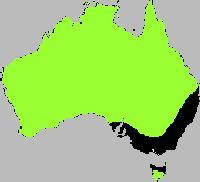 |
| Habitation area of the musk lorikeet |
Very rare as pets in America and Europe but a delightful pet in Australia though still not very popular due to government regulations that require a licence to keep native birds.
Wikipedia article about musk lorikeet.
Click here for Video showing Musk Lorikeet.
Little Lorikeet. Glossopsitta pusilla.
(red-faced lorikeet, green parakeet) Approximately 40-45 grams and about 15 cm (6 inch) long.
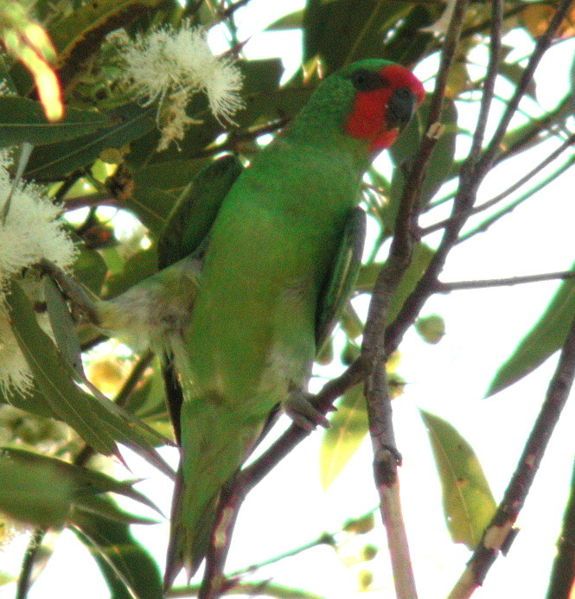 |
| Little lorikeet |
Like others in the family the little lorikeet eats mainly fruit, pollen and nectar but prefers to be high in the canopy of trees. In the wild the little lorikeet inhabits East Australian forests, coastal heath and open woodland, and is very sociable often forming large flocks.
 |
| Natural habitat of the little lorikeet |
Not kept as a pet in its native Australia and a very rare pet in Europe and America.
Video of little lorikeet.
Rainbow Lorikeet. Trichoglossus haematodus Malaccans.
 |
| Rainbow lorikeets |
(blue mountain lorikeet, green collar lorikeet, bluey, swainson’s loris) 125 grams approximately with a length of about 30 cm (12 inch).
Around flowering trees and sometimes in the company of scaly-breasted lorikeets, the rainbow lorikeet may congregate in noisy flocks of several hundred to roost and eat.
 |
| Distribution of the rainbow lorikeet |
The rainbow lorikeet is very popular as a pet bird in its native Australia and also quite popular in Europe and America. A pet one can be a good source of amusement as they are always playing; a young bird can become tame quite quickly.
Rainbow lorikeet on Wikipedia.
Rainbow lorikeet video on YouTube.
Varied Lorikeet. Psitteuteles versicolor.
 |
| Varied lorikeet |
About 55 grams and average 19 cm (7.5 inch) long.
In the wild the varied lorikeet is mainly found in large flocks in melaleuca and eucalyptus woodlands in the tropical lowlands of Australia.
 |
| Varied lorikeet distribution |
Virtually unknown as a pet in America and Europe and although there are a few kept as pets in Australia, this is still a rare occurence.
Wikipedia about the varied lorikeet.
Scaly-breasted Lorikeet. Trichoglossus chlorolepidotus.
 |
| Scaly-breasted lorikeet |
(green and gold lorikeet, greenie) About 75-80 grams and about 23 cm (9.5 inch) in length.
Although common in urban areas where it makes use of nectar rich garden plants, in its natural habitat the scaly-breasted lorikeet will form large flocks, often in the company of rainbow lorikeets. These flocks will travel from tree to tree in the open forested areas of its native land.
 |
| Distribution area of scaly-breasted lorikeet |
Scaly-breasted lorikeet on Wikipedia.
Scaly-breasted lorikeet video.
 |
| Red-collared lorikeet |
Approximately 125 grams in weight with a length of about 30 cm (12 inch).
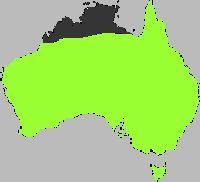 |
| Distribution of red-collared lorikeet |
Unlike most of the other species of lorikeet the red-collared lorikeet prefers to abide as a pair or in a small flock. These move around often due to their food source, the eucalyptus flower being a favourite food so they tend to inhabit the open eucalyptus forests most of the time.
Wikipedia about red-collared lorikeet.
Video of red-collared lorikeet on YouTube.
Purple-crowned Lorikeet. Glossopsitta porphyrocephala.
 |
| Purple-crowned lorikeet |
Will form large flocks where food source is plentiful, including urban gardens and orchards. Their natural habitat in the West is in forest areas, whereas in the East they tend to go for coastal heath, mallee and open woodland areas.
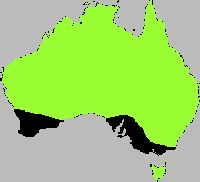 |
| Natural distribution of the purple-crowned lorikeet |
Purple-crowned lorikeet on Wikipedia.
YouTube video starring the purple-crowned lorikeet.
Accommodation and feeding
A large aviary is not required to keep lorikeets but you really should have a suspended mesh floor on your lorikeet aviary. This is because the nature of the lorikeet diet produces lots of droppings that are difficult to clean from a solid floor (plus you will be constantly cleaning). It is much easier and efficient to have a suspended mesh floor so you can then just hose it down to clean. For the larger lorikeets such as the musk, rainbow, or scaly-breasted an aviary about 8 foot (2.4 metres) long, by 2 foot (0.6 metres), by 3 foot (0.9 metres) is fine. For the smaller lorikeet species like the purple-crowned for example, an aviary of about 4 foot (1,2 metres), by 2 foot (0.6 metres), by 3 foot (0.9 metres) will be sufficient. Don’t forget the suspended mesh floor!
Here are a couple of recipes suitable for lorikeets:
Dry recipe. 1 dessert-spoon pollen (optional), 1 cup of glucose powder, 2 cups of rice flour, 2 cups of baby rice cereal, 2 cups of egg & biscuit mix, 1 teaspoon vitamin mineral powder. Mix all the ingredients together and store in an airtight container in the refrigerator.
Of course if you can get hold of some nectar bearing fresh flowers your lorikeets will love them!
For more about lorikeets click on any of these three links:
http://www.sandiegozoo.org/animalbytes/t-lorikeet.html
http://www.aquaticcommunity.com/lories/
http://en.wikipedia.org/wiki/Lories_and_lorikeets
Take a look at the lory and lorikeet pictures on the 'Stanton Birdman' 'Facebook' page
Pick up your copy of my pet bird keeping ebook on ‘Amazon Kindle’ by clicking here.
If you prefer the ebook as a ‘pdf’ on CD-rom to use on any PC (including ‘mac’) then click here. If buying the ‘pdf’ on CD-rom I’ll throw in a free bonus as a special thank you, once your order has been confirmed I’ll email it straight out to you so no waiting for the postal service.
Loads of thanks for your interest!
Sunday, 22 May 2011
Suggestions for Choosing Your New Small Pet Bird or Birds - A Few Things to Consider
 |
| Cockatiel |
When selecting what type of new pet bird would best suit your circumstances and desire there are a few thing you must consider before making that all-important purchase.
During my 10 years experience I have only dealt with small pet birds so unfortunately for some my knowledge is restricted to these only.
Firstly you must decide what type of bird you would like and if it would be suitable to your circumstances, then you need to be sure you have a home set up for your new feathered friend before you bring it home.
Below is a brief but hopefully informative list of the most popular small pet birds and the ups and downs of their upkeep:
BudgieFrom the parrot family and originally from Australia the budgie is often called ‘parakeet’ or ‘long-tailed parakeet’, the budgerigar is without a doubt the most popular pet bird in the Western world and with good reason; small enough to handle, easy to tame, inexpensive, a startling array of different colours, can be kept on its own, very friendly (if tame), a chatterer, minimum requirement to keep in good health, easy to breed (if you want to), usually mixes well with other small birds (budgies and other species). Ideal in a cage or aviary.
However budgies can inflict a nasty wound if they bite you whilst handling (rarely a problem if they’re tame, but they can draw blood if they sink their beak in), they can also be rather destructive (they love to chew), and budgerigars can be very territorial during breeding (especially if kept with other birds).
In the wild budgies live in large flocks and so need plenty of interaction to save them from becoming bored. They therefore need to be kept busy with lots of toys and your attention, or alternatively kept with another of their kind, so as they can interact with each other.
CockatielAnother Australian bird often called ‘tiel’ for short, these small parrots are also very popular as pets, due to their calm nature and unique character. A little bigger than the budgie so more space is required (a bigger cage for example), the cockatiel also lives in large flocks in the wild so again interaction and toys are a must.
They can be kept an their own or in pairs or small groups, and easy to keep. Ideal as a cage or aviary bird, and because of their calm nature the cockatiel will normally mix well with other small birds of a different species (cockatiels are often kept in the same aviary as budgerigars and finches with rarely any problems). They can learn to mimic other sounds with patience and determination, and are easy to tame.
However they can also inflict a rather nasty wound if they choose to bite (probably a worse injury than the budgie due to their larger beaks, but again not usually a problem when tame). Ideally if you want to breed your cockatiels they need to be on their own as a breeding pair with no other birds. These birds can also be very destructive due to their desire to have a chew at almost anything, but they are easily startled (so no sudden loud noises or sudden bright lights please!).
FinchesSomewhat smaller than budgerigars and cockatiels, and not part of the parrot family, the most popular types of finch are again very popular for good reason: very easy to keep, good natured, small and compact, extremely active, cute, prolific breeders, usually low priced, little space required for good upkeep (the perfect pet bird for apartments, flats and small living areas).
There are many types of finch available on the pet bird market but the most popular are: zebra finch, society finch (Bengalese finch), gouldian finch, java finch (java sparrow), the java being the largest of the four just mentioned (slightly smaller than the budgie).
All of these can be accommodated in a cage of aviary and also usually mix well with other species (I keep budgerigars, cockatiels, zebra finches, Bengalese finches, and javas together in a large outdoor aviary and very rarely have any problems).
As for the initial cost of these little characters the zebra finches usually come out the least expensive (from £3 to £8 each, often with a good deal for a pair), next would be the society finches (from £5 to £10 each, again with a better deal for a pair), then the javas (£8 to £15 each, buy two for a better price), and the gouldian finches coming out on top (the cheapest I’ve seen these is about £20 each right up to £60 - sometimes more - but a deal on more than one can usually be arranged). The reason for the bigger price for the gouldians is because of their great colouring and rarity, a desirable bird that people will often pay handsomely for.
However finches do not always take readily to handling and must be kept in groups of 2 or more.
At least due to their small size a bite is not likely to bother you a great deal.
OthersThere are many other types of birds available but the price is usually higher as they are not as common.
Many other types of parakeets however are still rather popular - ring neck parakeet, grass parakeet (bourke, turquoisine, elegant, alexandrine), kakariki (New-Zealand parakeet), rosella, love bird to name but a few.
The upkeep however for all small pet birds is basically the same.
Always remember to shop around for the best deal and if possible buy your new bird or birds from a breeder, or hobbyist rather than a pet shop.
A note on accommodation for your new pet bird.Most small pet birds will live happily in an aviary, and this is the nearest they are likely to get to their natural environment, but in an aviary your birds will become semi-wild and may not take very well to handling or one on one interaction.
Caged birds however are a different matter, and can often be tame and friendly towards us humans. Make sure that if you plan to keep your bird or birds in a cage then go for the biggest you can afford (within reason of course, no good putting zebra finches in a large wide barred parrot cage); your bird needs to be able to stretch its wings to their fullest extent and still have some room left.
Most pet birds - especially parrot type species - will spend more time climbing than flying, even in an aviary.
For more bird keeping related issues please email me with your questions.
More information can be found in my new pet bird keeping ebook available now, visit http://www.amazon.co.uk/Pet-Bird-keeping-Secrets-Stealth-Guidebook/dp/B004WP3OFW/ref=sr_1_2?ie=UTF8&qid=1305890625&sr=8-2 to get your copy.
'Stanton Birdman' is also on Facebook, http://www.facebook.com/home.php#!/pages/Stanton-Birdman/178059325577474

Subscribe to:
Posts (Atom)